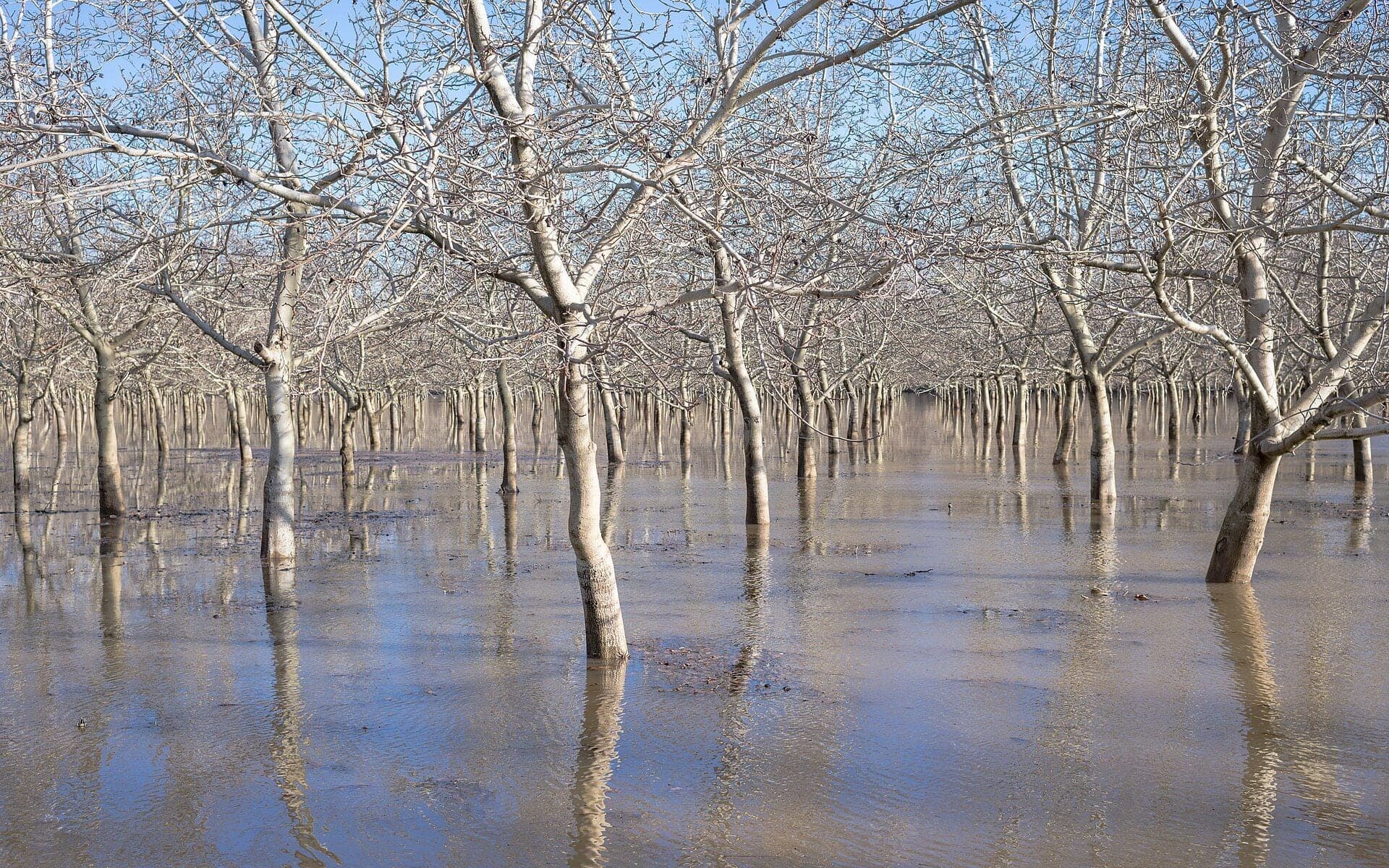
Gov. announced Nov. 17 that California has completed the Tisdale Weir Rehabilitation and Fish Passage Project in Sutter County, upgrading a state-owned flood-control structure on the Sacramento River ahead of potential El Niño storms.
Originally built in 1932 by the U.S. Army Corps of Engineers, the weir is one of five major weirs on the river and diverts high flows from the Sacramento River into the bypass system. The Department of Water Resources said it can send up to half the river’s flow through the Tisdale Bypass into the Sutter Bypass during high-water events, relieving pressure on downstream levees. That matters most when successive storms keep river levels elevated for extended periods, DWR said.
The project also adds fish passage for Chinook salmon and green sturgeon, which could become stranded behind the weir when river levels dropped. DWR described a gated opening in the weir, a connecting channel to the Sacramento River and a redesigned basin that helps guide fish back to the river as floodwaters recede.
“This project is a win-win for people and nature,” said California Secretary for Natural Resources . “It protects downriver communities against flooding by enabling water to overtop into the bypass when the Sacramento River is high. It also provides fish that come into the bypass safe passage back to the Sacramento River.”
DWR Director Tom Gibson said the project is “a great example of how we’re modernizing that infrastructure to meet today’s challenges, reducing flood risk for Sacramento Valley communities while improving conditions for fish in the Sacramento River.”
Jason Ince, a spokesperson for DWR, said the project cost $30.7 million, paid for with a mix of Proposition 1 and Proposition 68 funding, DWR deferred maintenance funds and general fund allocations. Construction began in June 2025, and the weir is operational as of November and ready to receive flows if the Sacramento River reaches its crest, Ince said. The fish passage operates once river levels recede below the weir crest, which can take a few days or last for months, depending on the year, he said. The U.S. Army Corps of Engineers is expanding the Sacramento Weir, Ince said, and the Fremont Weir received a new fish passage in 2025 through the Big Notch project.
The governor’s office said Newsom proclaimed a state of emergency in September to bolster El Niño preparedness and issued executive orders on Highway 1 and coastal communities and on streamlining storm-preparedness projects such as levee repairs and debris clearing.
DWR said it has stockpiled flood-fighting materials at 68 locations statewide, including 4.4 million sandbags, more than 52,000 feet of “Muscle Wall” portable flood barriers and 400,000 tons of rock for emergency levee repairs. Each fall, the state inspects all 1,600 miles of levees under the State Plan of Flood Control, the release said.
The release also criticized federal flood-preparedness spending. It said the Trump administration’s fiscal year 2025 Army Corps work plan provided no construction funding for four California flood-control projects that had been slated to receive a combined $126.4 million, and that the administration tried to cancel FEMA’s Building Resilient Infrastructure and Communities program before courts ordered it restored.
The governor’s office urged Californians to sign up for local emergency alerts, learn their flood risk, keep an evacuation plan and an emergency kit ready, and never drive through floodwater. It pointed readers to Cal OES’s Listos California El Niño preparedness guide for regional tips and checklists.

State
Gavin Newsom
Governor · Democrat
Named 2 times in this story.
Portrait: Official portrait

State
Wade Crowfoot
Secretary for Natural Resources
Named once in this story.
Portrait: Region 5 Photography, USDA Forest Service / Wikimedia Commons (public domain)
Sources & methodology
This report was written from the primary materials below. Links open at the original publisher.
Office of the Governor of California California Department of Water ResourcesSee something we should correct? Read our corrections policy.