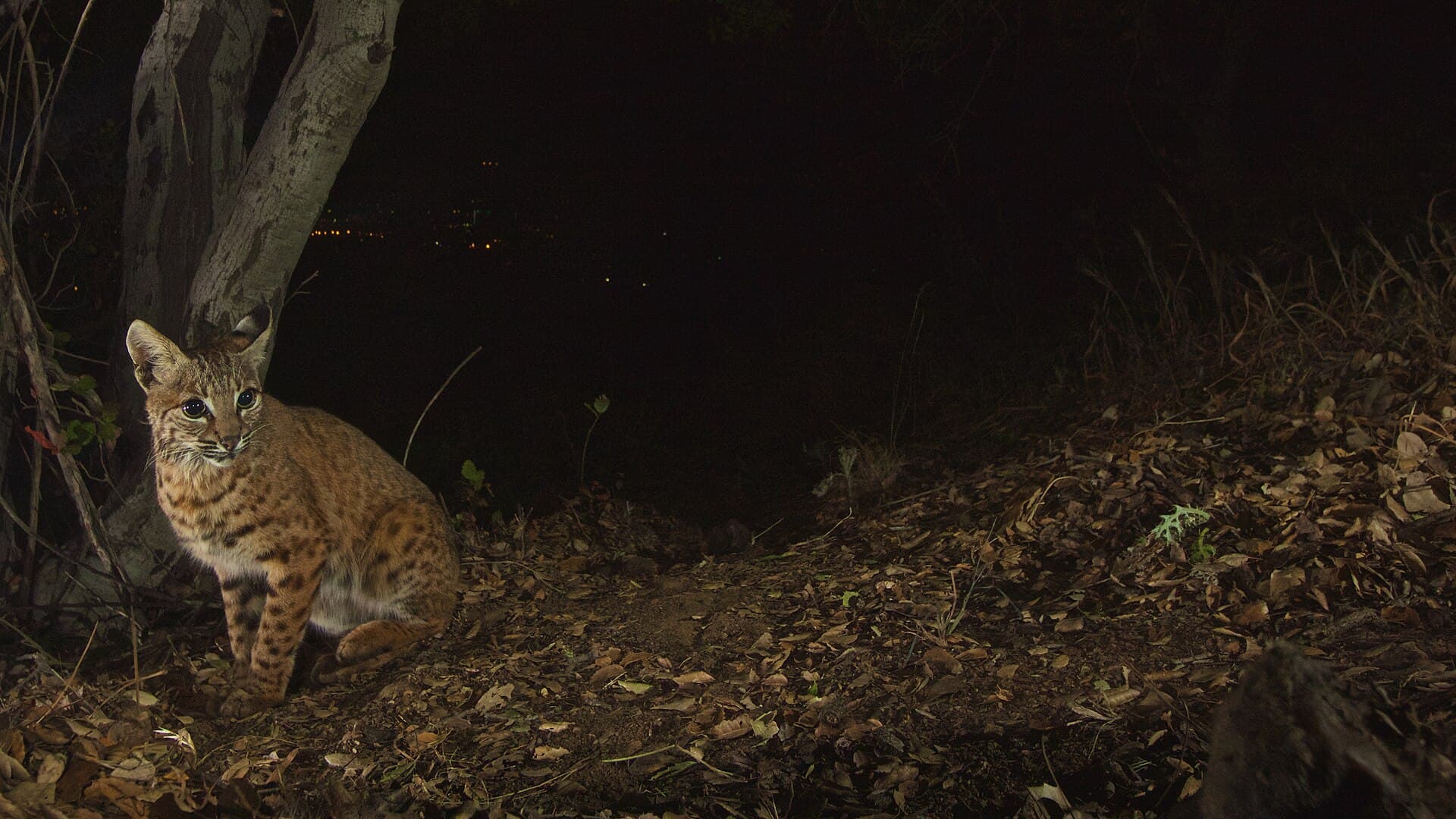
California has its first-ever plan for managing bobcats, and the state wants to hear from the public before it is final. The California Department of Fish and Wildlife released the 133-page draft California Bobcat Conservation and Management Plan on Oct. 1 and is taking written comments through Nov. 1.
The plan estimates there are more than 62,000 bobcats in California, distributed throughout the state. CDFW said that number is similar to its estimates from 1977 and 1981, but those earlier counts lacked statistical rigor, and the draft says the department is not confident of long-term population trends. It calls for systematic, long-term monitoring to find out.
The plan is a product of Assembly Bill 1254. Enacted in 2020, the law made it illegal to hunt, trap or otherwise take a bobcat except in limited circumstances, such as under a depredation permit, and directed CDFW to write a conservation and management plan before bobcat hunting could be considered again. The department developed the draft over five years alongside the California Bobcat Population Monitoring Project, whose report of findings came out in August.
The draft cites vehicle strikes and disease, specifically mange, as leading causes of death, though CDFW notes those figures reflect the deaths that are easiest to detect. Notoedric mange, a contagious skin disease caused by a parasitic mite, accounted for 19% of the bobcat carcasses submitted during the department's health study, and Los Angeles County had the most mange deaths, 11. Of the 29 bobcats whose deaths were attributed to mange, 28 had been exposed to anticoagulant rodenticides. The plan says it is still unknown whether that link is coincidental or causal.
The plan names Santa Clara County, parts of the Central Coast including Monterey County, and Southern California, especially Los Angeles, Ventura and Orange counties, as hot spots for mange outbreaks.
Only the California Fish and Game Commission can reinstate a bobcat hunting season. Before it could open one in any area, state law requires the commission to consider the effects on bobcat populations and their wild prey, adopt this plan and consider the cost of managing a hunt. If the commission moves forward, the draft says CDFW would recommend management zones, possibly based on the 19 ecoregions used in its bobcat research, along with sustainable tag quotas, and would monitor hunted populations and recommend changes if survival rates fall below sustainable levels.
The plan's history section recalls much heavier harvests in the late 1970s, when demand and prices for bobcats were high. The estimated combined harvest from hunting and trapping in 1977-78 was 21,922 bobcats, and the 1979 season was closed after only 11 weeks, when the quota of 14,400 bobcats was reached.
Comments can be emailed to wildlifemgt@wildlife.ca.gov with “California Bobcat Conservation and Management Plan” in the subject line, or mailed to the California Department of Fish and Wildlife, Wildlife Branch, Attn: Rachel Roberts, P.O. Box 944209, Sacramento, CA 94244-2090.
Sources & methodology
This report was written from the primary materials below. Links open at the original publisher.
California Department of Fish and Wildlife news release, Oct. 1, 2026 Draft California Bobcat Conservation and Management Plan (September 2026) California Bobcat Population Monitoring Project, Report of FindingsSee something we should correct? Read our corrections policy.