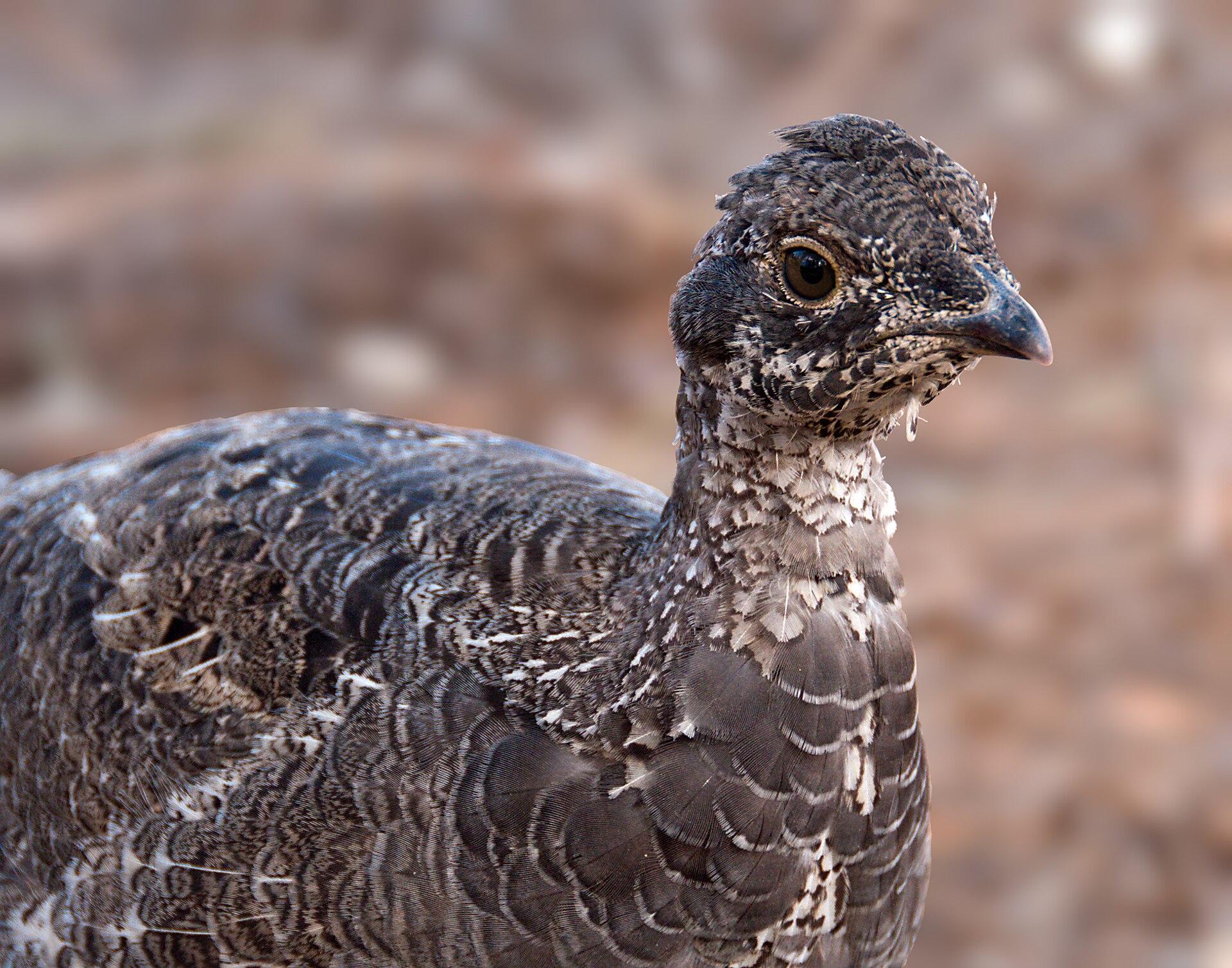
A high-elevation grouse that once hooted from the treetops of Mount Pinos and the Tehachapi Mountains now has state endangered-species protection while California decides whether to list it.
The California Fish and Game Commission voted unanimously on Oct. 13 to make the Mount Pinos sooty grouse a candidate under the California Endangered Species Act, according to the California Farm Bureau Federation. Candidate species receive the safeguards of a state threatened species, including a prohibition against unauthorized killing or take, while the California Department of Fish and Wildlife conducts a 12-month status review.
The subspecies’ historical range ran from Kings Canyon in the southern Sierra Nevada to isolated peaks of the southernmost Sierra and the northern Transverse Ranges in Kern and Ventura counties, CDFW said in its August petition evaluation. The bird has been extirpated from those southern “sky islands” since the late 20th century, the evaluation said, and a 2002 survey found the southernmost known occurrence at Sunday Peak in the Greenhorn Mountains.
The remaining range covers about 2.66 million acres, mostly on federal land in the Inyo and Sequoia national forests, Giant Sequoia National Monument and Sequoia and Kings Canyon national parks, according to the evaluation. The Farm Bureau said the bird lives in mature pine-fir forests between 6,000 and 10,000 feet in parts of Fresno, Tulare, Inyo, Kern and Ventura counties.
The Center for Biological Diversity and Los Padres ForestWatch petitioned for the listing on March 25, 2026. The petition names logging, wildfires made worse by fire suppression and climate change, livestock grazing, recreation and hunting as the main threats. CDFW recommended that the commission accept the petition, finding there was sufficient scientific information to indicate listing may be warranted.
In the August evaluation, CDFW said it classifies sooty grouse as resident small game and allows hunting of the Mount Pinos subspecies in Fresno, Inyo and Tulare counties, with a daily limit of two birds and a possession limit of six. No hunting is allowed in the historical range in Kern and Ventura counties. The petition reports that grouse harvested per hunt day across the range fell from 1.16 in 1994 to 0.12 in 2023, but the department cautioned that its harvest surveys rely on small samples and changing methods.
Scientists also have not settled which subspecies the southern Sierra birds belong to. The center said a genetic study is needed to determine whether sooty grouse south of Kings Canyon are Mount Pinos or Sierra birds.
“Sooty grouse have already been driven out of their namesake Mount Pinos and the rest of Southern California’s Transverse Ranges, so protection is absolutely crucial for surviving populations in the Sierra Nevada,” Jeff Miller, a senior conservation advocate at the center, said after the vote.
The Farm Bureau encouraged farmers and ranchers in potential habitat to contact their local CDFW regional office for guidance. After the status review, the commission will decide whether listing the grouse as threatened or endangered is warranted.
Sources & methodology
This report was written from the primary materials below. Links open at the original publisher.
California Department of Fish and Wildlife (petition evaluation, August 2026) California Farm Bureau Federation Center for Biological DiversitySee something we should correct? Read our corrections policy.