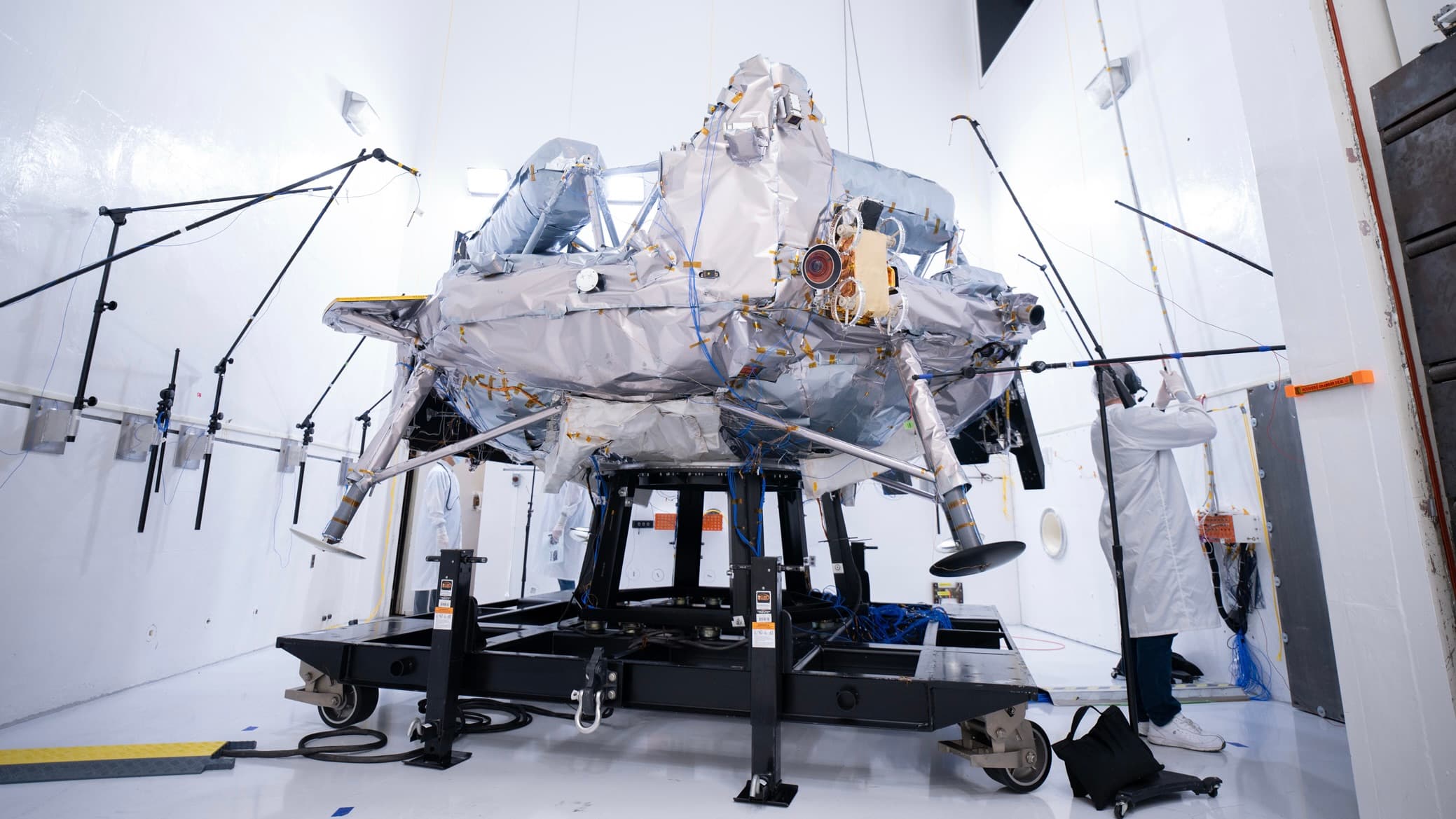
NASA said the Jet Propulsion Laboratory is marking its 90th anniversary and is leading multiple upcoming missions, including SkyFall, MoonFall, SunRISE and NEO Surveyor.
The agency traced JPL’s origins to Caltech graduate students who conducted rocket-propulsion tests in Pasadena’s Arroyo Seco on Oct. 31, 1936; the lab later launched Explorer 1 in 1958 with a Geiger counter that discovered Earth’s radiation belts and joined NASA that same year.
NASA’s account lists a string of early firsts from JPL: the first U.S. mission to the Moon with Ranger 7 in 1964, the first planetary flyby, the first probe to visit all four gas giants, the first infrared telescope, the first rovers on Mars and the first rotorcraft to fly on Mars.
Looking forward, JPL is developing SkyFall, which NASA said is aiming for a 2028 launch and will deploy three helicopters mid-descent over Mars to map hidden ice deposits and analyze weather patterns.
JPL is also developing MoonFall to land a group of large propulsive drones at the lunar South Pole that same year; NASA described the project as supporting work on a future Moon Base.
SunRISE, which NASA said is set for a 2027 launch, will fly six toaster-oven-size satellites in formation to create a miles-wide radio antenna dish to study the Sun’s activity; NASA said that knowledge could help make human spaceflight safer.
NEO Surveyor, managed by JPL, will search for potentially hazardous near-Earth objects that other telescopes can’t find; NASA said once an object is spotted it can provide a threat assessment and plan accordingly.
Closer to Earth, NASA said JPL is leading missions to measure movement of water by tiny gravity changes, to study formation of powerful tropical convective storms and to detail how different air pollutants affect health; JPL also contributes instruments such as NISAR, a joint mission with ISRO, and AVIRIS sensors developed at JPL’s Microdevices Laboratory, where the agency said the "camera on a chip" technology was invented and where detectors are being developed for PRIMA, a probe-focused far-infrared mission for astrophysics.
Sources & methodology
This report was written from the primary materials below. Links open at the original publisher.
NASASee something we should correct? Read our corrections policy.