Source claim — The Office of the Governor said on September 10, 2026, that Governor signed a bipartisan package of laws strengthening protections for children online, including what the office calls the nation’s strongest companion-chatbot regulations and new bans on addictive social-media features for users under 16.
Source claim — The administration described a bill named for Adam Raine, “Adam’s Law,” as requiring companion chatbots marketed to children to include suicide-crisis protocols, parental controls, and notifications if a child disables safety settings. The office said the bill also requires independent child-safety audits and annual risk assessments.
Source claim — The governor’s office said the package prohibits social-media platforms from providing users younger than 16 with addictive features such as autoplay and algorithmic feeds based on user history or profile.
Source claim — The administration said the laws expand the legal definition of child sexual exploitation to include digitally altered or AI-generated material that depicts a person under 18 in sexual conduct. The office also described new limits on targeted advertising to children and rules governing use of K–12 pupil data in AI systems.
Observed fact — The press release lists the principal measures in the package: AB 1709 (age restriction; e‑Safety Advisory Commission); SB 1119 (companion chatbots; children’s safety); AB 2 (injuries to children: civil penalties); AB 1856 (age-verification signals); AB 1946 (reporting mechanism for child sexual abuse material); AB 2246 (access by children to online services); AB 1159 (student personal information); AB 2071 (digital wellness instruction); AB 302 (communication about extracurricular activities and addictive feeds); SB 1276 (sexual exploitation statutes); SB 1128 (technology-based materials on school devices); AB 2298 (computer science standards); and SB 867 (toys: companion chatbots).
Source claim — The governor’s office described prior state actions as context: earlier California laws and executive orders on AI, transparency, age verification, social-media harms, deepfakes, AI-watermarking and audit frameworks, and programs such as Soluna and Brightlife Kids. The release cites SB 53 (Transparency in Frontier AI Act), SB 813 (framework for independent verification organizations), and AB 1405 (state registry for AI auditors) among recent steps.
Source claim/Observed fact — The administration said California expanded civil remedies for deepfake and nonconsensual sexually explicit material, allowing victims to seek civil relief of up to $250,000 per action against third parties who knowingly facilitate or aid distribution.
Analysis — If implemented as described, companies that operate companion chatbots or social platforms will need to change design and operations: adopt crisis and parental controls, limit specific product features for users under 16, run independent safety audits and publish risk assessments, and change advertising and pupil-data uses for K–12 systems. This follows directly from the administration’s description of the bills’ requirements as legislative obligations for covered services and products (source claim). Inference — Enforcement details, compliance timelines, and technical standards are not specified in the press release. The practical effect will depend on administrative rulemaking, enforcement actions, and court review of any constitutional or preemption challenges (inference). Analysis — Age verification, defining “addictive features,” and policing AI-generated content are technical and legal tasks that typically require regulatory detail; the press release does not provide those details (observed fact). The laws’ impact on startups, platform architecture and cross‑state platforms will depend on those forthcoming rules and on how courts treat state limits on online services (inference).
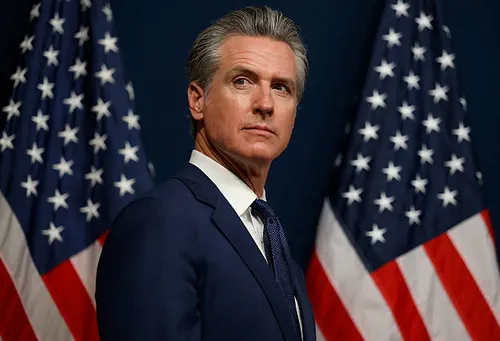
State
Gavin Newsom
Governor · Democrat
Named 2 times in this story.
Portrait: Official portrait
Sources & methodology
This report was written from the primary materials below. Links open at the original publisher.
Office of the Governor of CaliforniaSee something we should correct? Read our corrections policy.