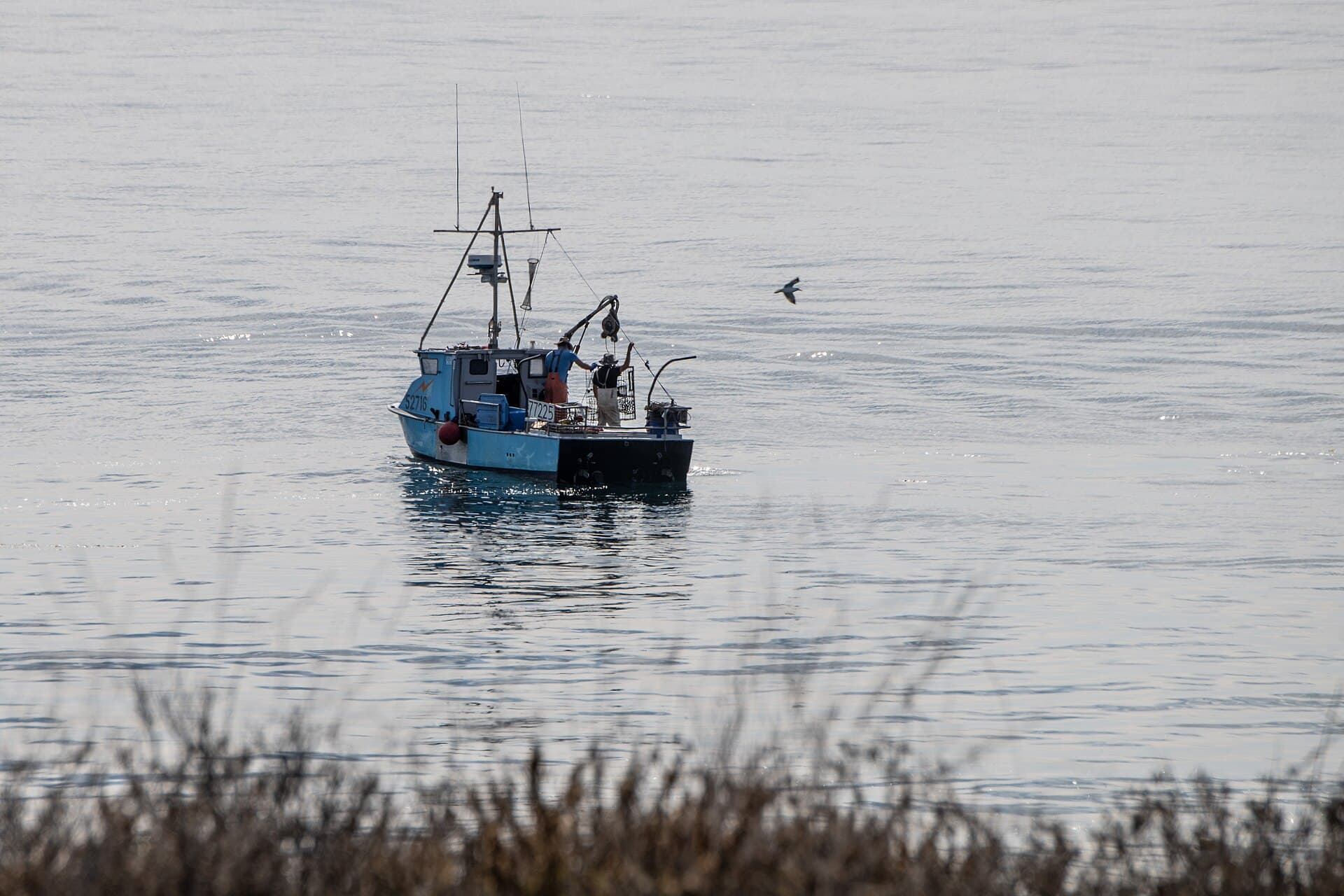
California's recreational Dungeness crab season opens Nov. 7, but crabbers from the Oregon border to Point Conception won't be able to use traps until at least Jan. 1, 2027, and the commercial season has been pushed back to at least the same date, the California Department of Fish and Wildlife announced Oct. 30.
The department said both the recreational trap restriction and the commercial delay are required because of the number of humpback whale entanglements during the 2026 calendar year. Current regulations require the CDFW director to take those steps to reduce the chance of more entanglements for the rest of the year, and the delay also lets whales migrate out of California waters before the commercial fishery opens, the department said. It cited the number of confirmed entanglements this year and a high abundance of humpback whales across the fishing grounds.
The trap restriction covers Fishing Zones 1 through 5. It does not affect hoop nets or crab snares, also called loop traps. CDFW reminded anglers that hoop nets must be serviced every two hours and cannot be left unattended longer. The department also issued a Fleet Advisory for all recreational fishing zones and said crabbers should avoid setting any gear where whales are present.
Part of the North Coast will stay closed to recreational crabbing altogether. State health agencies found unhealthy levels of domoic acid in Dungeness crab collected north of Fort Bragg and recommended delaying the opener in state waters from Cape Mendocino to the Ten Mile State Marine Reserve, in southern Humboldt and northern Mendocino counties. CDFW Director Meghan Hertel delayed the season there, and taking or possessing Dungeness crab in those waters is prohibited.
That closure will remain until the Office of Environmental Health Hazard Assessment, in consultation with the State Public Health Officer at the California Department of Public Health, determines that domoic acid no longer poses a significant public health risk. Domoic acid is a neurotoxin produced by a naturally occurring marine alga, Pseudo-nitzschia. At low levels it can cause nausea, diarrhea and dizziness; at higher levels it can cause persistent short-term memory loss and seizures and can in some cases be fatal, the department said.
“CDFW remains committed to working collaboratively with all sectors across California to protect whale and turtles from entanglements in fishing gear,” Hertel said. “Partnerships are more important than ever as we work together to protect endangered whales and turtles and our fishing communities in the face of increasing disruptions from our changing climate.”
CDFW expects its next risk assessment in mid-December. The director will weigh all available data, including a recommendation from the Dungeness Crab Fishing Gear Working Group, to decide when the commercial fishery can open and the recreational trap restriction can be lifted, possibly around the new year.
Crabbers can check closures on CDFW's Domoic Acid Fishery Closure Information Line at (831) 649-2883 and CDPH's biotoxin information line at (510) 412-4643 or (800) 553-4133.
Sources & methodology
This report was written from the primary materials below. Links open at the original publisher.
California Department of Fish and WildlifeSee something we should correct? Read our corrections policy.