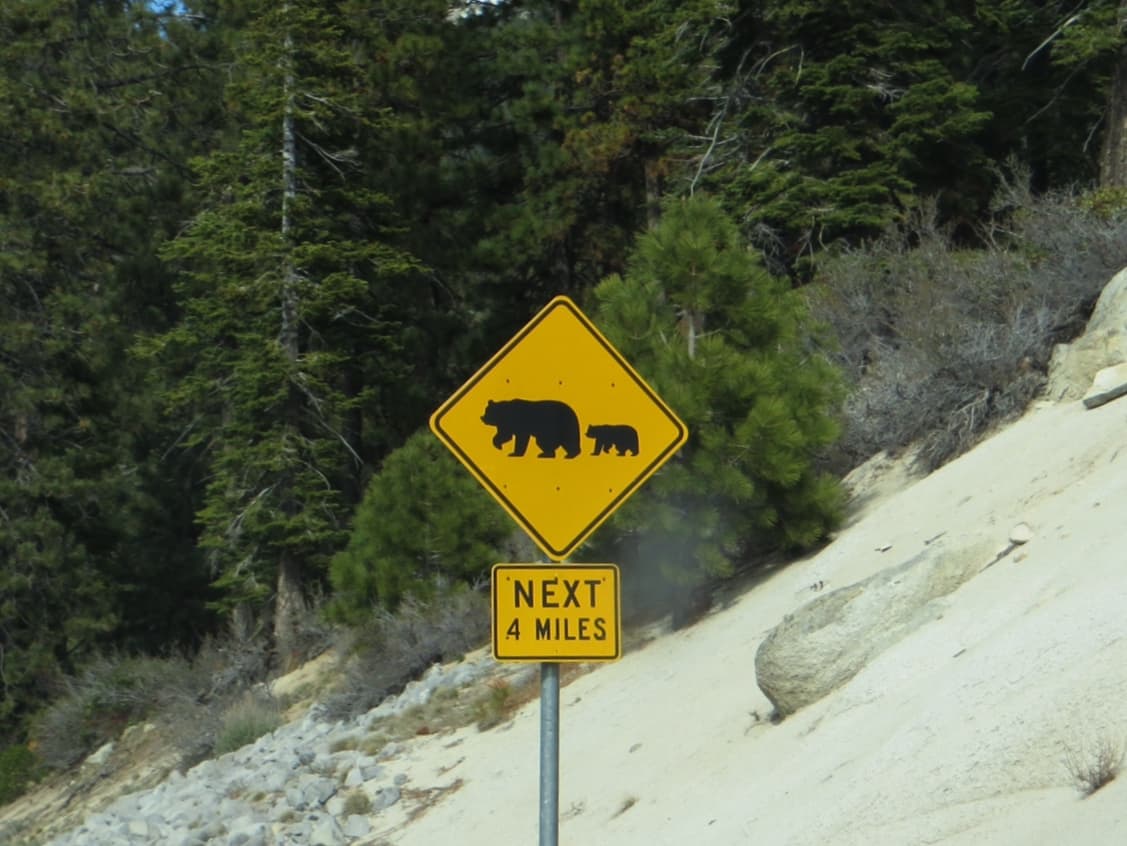
Wildlife officials are asking drivers in the Lake Tahoe Basin to slow down and stay alert this fall as black bears spend more time on the move in search of food, the California Department of Fish and Wildlife said in an Oct. 16 announcement.
During hyperphagia, the period when bears consume as many calories as possible to prepare for winter, bears can spend much of the day and night foraging, CDFW said. That search takes them across highways, neighborhoods and other busy roads throughout the basin.
At the same time, shorter fall days mean more drivers are traveling during low-light hours, when wildlife can be active and difficult to see, the department said. A collision with a bear can result in serious or fatal injuries to the animal, orphaned cubs, property damage and potential injuries to drivers and passengers.
CDFW said wildlife agency experts respond to bear-vehicle collisions throughout the Tahoe Basin each year, but the total is difficult to determine. Not every collision is reported, animals struck by vehicles may leave the roadway before they are found, and road and weather conditions, carcass removal and other factors make wildlife-vehicle deaths hard to track consistently.
Bears that regularly find food in developed areas also spend more time around roads, homes and businesses, increasing their risk of being struck, the department said. Securing garbage, food and other attractants helps keep bears from crossing roads to reach human food sources.
CDFW advised drivers to slow down and follow posted speed limits, particularly at dawn, dusk and at night, watch for wildlife along roadways and, after seeing one bear, watch for others, because female bears may be traveling with cubs. The department said drivers should never stop in a travel lane or along a highway to view or photograph wildlife and should not swerve to avoid an animal, since sudden swerving can cause drivers to lose control or enter oncoming traffic.
In California, collisions involving a bear, or a dead or injured bear along a roadway, can be reported to CDFW at 916-358-2917 or through its Wildlife Incident Reporting System. Non-emergency bear collisions in California State Parks can be reported to public dispatch at 916-358-1300. In Nevada, the Nevada Department of Wildlife takes reports at 775-688-BEAR (2327). For emergencies or collisions that pose an immediate threat to public safety, call 911.
Sources & methodology
This report was written from the primary materials below. Links open at the original publisher.
California Department of Fish and WildlifeSee something we should correct? Read our corrections policy.